
Use this free quick-start piano chord chart to find major, minor, 7th, augmented, and diminished chords without memorizing every note!

You don’t need to memorize hundreds of notes, scales, or complicated formulas before you can start playing real music at the piano.
You just need to understand a few basic chord shapes.
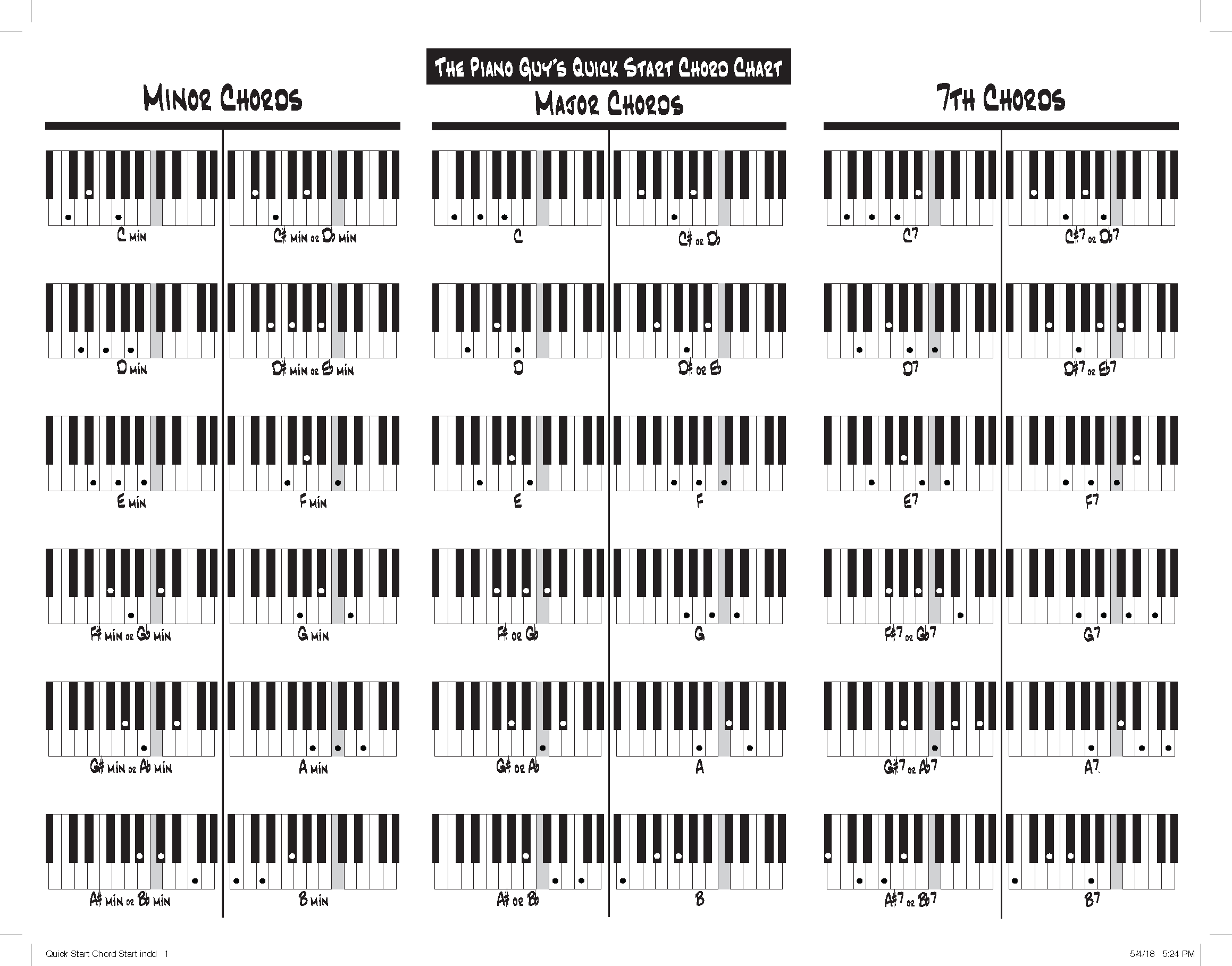
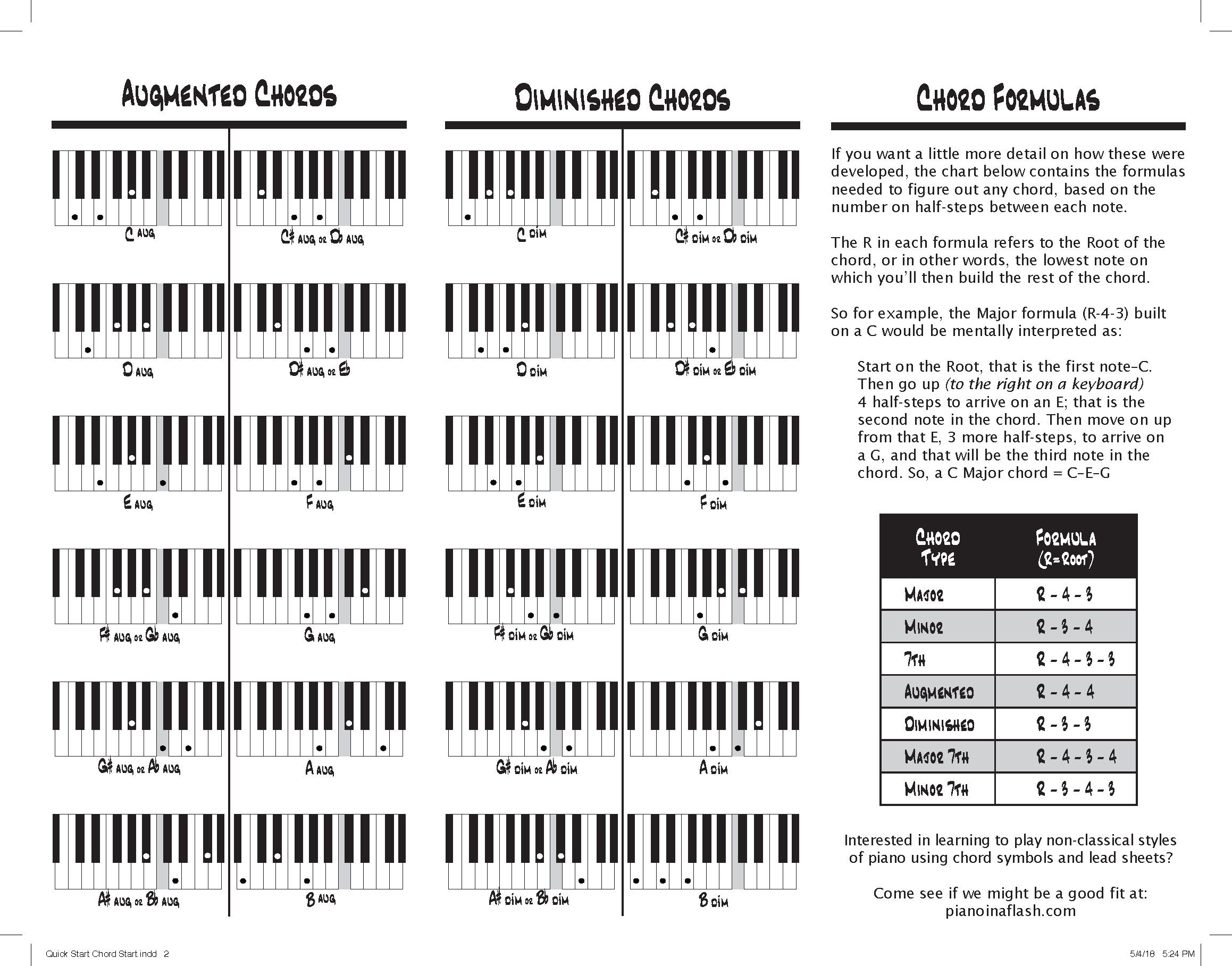
That’s why we created The Piano Guy’s Quick-Start Chord Chart. It gives you an easy visual reference for finding some of the most common chords you’ll encounter on lead sheets and chord charts. Check it out below and click here to download for easier viewing and printing
Each diagram shows you exactly which keys to play. We’ve also included the formulas behind each chord type, so you can begin to understand how chords are built instead of simply trying to memorize a long list of shapes.
Now, let me be clear: you do not need to learn every chord on this chart before you start playing.
Keep the chart close to your piano and treat it like a reference guide. When a chord symbol comes up in a song, find it on the chart, place your fingers on the marked keys, and keep going. The more often you use a chord, the more familiar it will become.
That’s a much more practical way to learn than drilling chords in isolation and hoping you remember them later.
This chart also includes alternate chord names, such as C♯ and D♭. Those names may look different on the page, but they refer to the same keys on the piano. Seeing both versions now will make it much easier to recognize them when they appear in different songs.
At Piano in a Flash, we teach adults to play non-classical piano using chords, lead sheets, and familiar songs. The goal isn’t to turn your practice time into a music-theory exam. It’s to give you enough information to sit down, understand what you’re looking at, and start making music.
Print the chart, set it beside your keyboard, and use it whenever you need a little help finding your next chord. Before long, many of these shapes will begin to feel like old friends.
.avif)